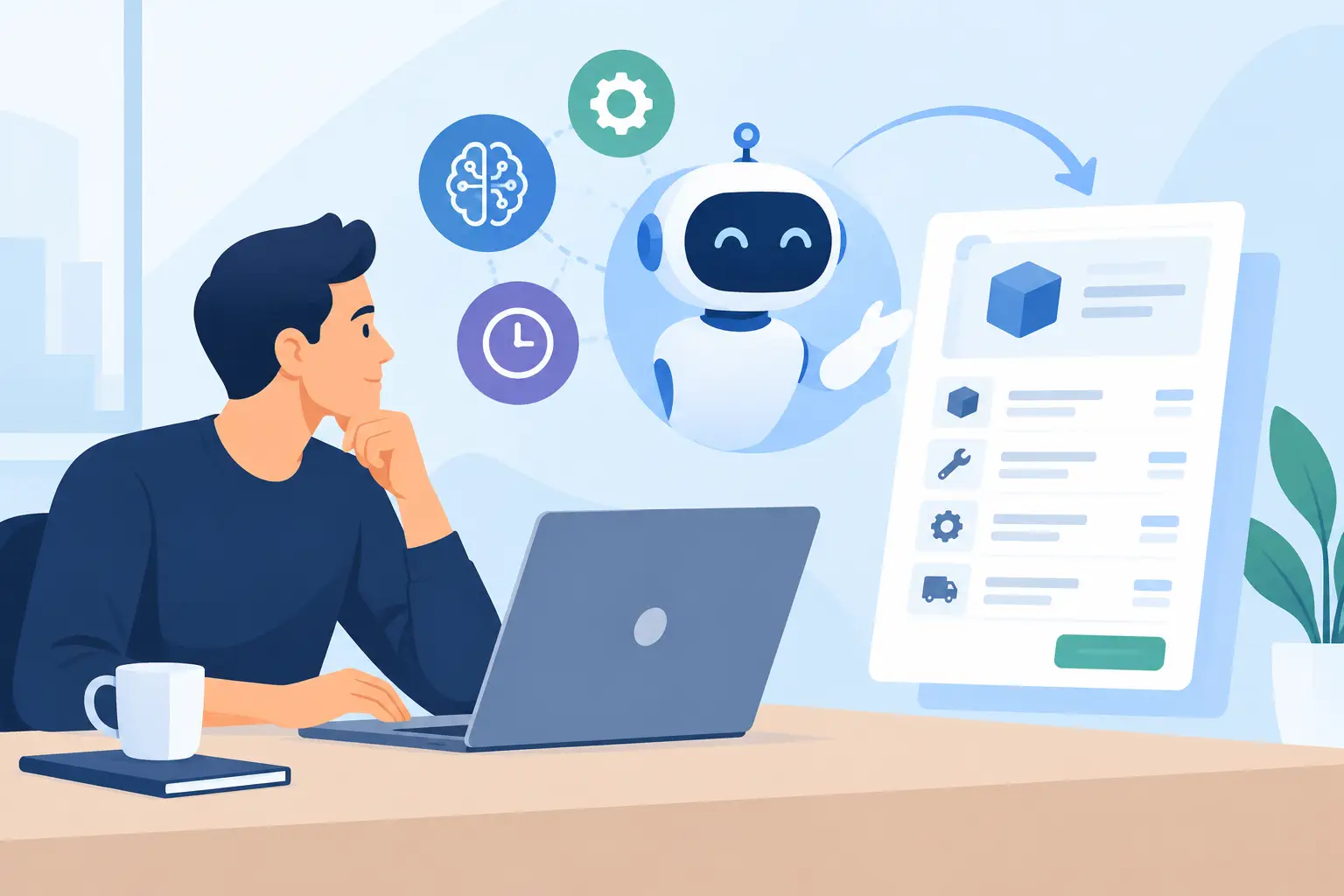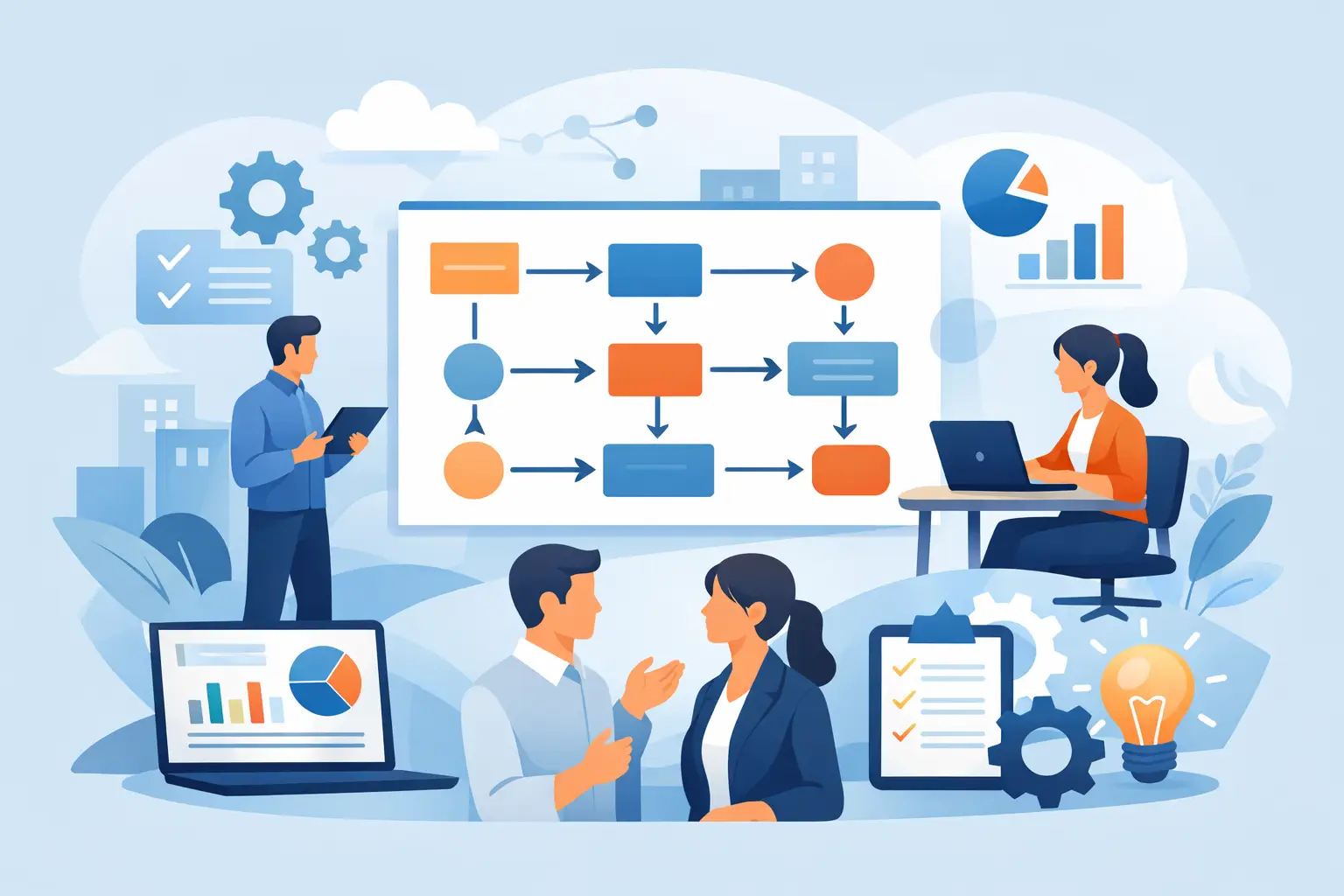
A quote approved in one tool, follow-up tasks tracked in another, customer notes buried in email, and documents signed somewhere else - this is where operations start slowing down. When teams work across disconnected systems, delays are not caused by lack of effort. They come from broken handoffs. A software gestione processi aziendali matters because it turns scattered work into a controlled flow that people can actually execute.
For SMBs, professional firms, and operational teams, the question is rarely whether to digitalize. The real question is which platform can support the way the business already works, without forcing expensive compromises. That is where many projects go wrong. Companies buy software with good demos and then spend months adapting internal routines to fit rigid logic that was never designed for them.
What a software gestione processi aziendali should really do
A good system does more than document a process. It should coordinate actions across teams, standardize recurring steps, reduce manual input, and give management visibility into what is blocked, delayed, or pending approval.
That sounds obvious, but many tools only solve one layer of the problem. A CRM may organize contacts and sales activity, but fail to handle post-sale tasks, approvals, or document workflows. A task manager may help teams track work, but not connect that work to quotes, customer communication, and signatures. An ERP may be strong on administration, while being too rigid for fluid operational processes.
A software gestione processi aziendali should connect these moments into one operational chain. If a sales rep creates a quote, the system should be able to trigger review steps, notify the right stakeholders, generate documents, collect signatures, and open execution tasks without duplicate entry. That is the point. Less copying, less chasing, more control.
Why companies replace tools that technically still work
Most businesses do not change software because everything failed. They change because daily execution became too fragmented. Teams are working, but not with enough speed or consistency.
The common signals are easy to recognize. Sales opportunities stall because nobody owns the next action. Quotes are created manually each time, even when the structure repeats. Approvals happen over chat and email, so there is no clear audit trail. Administrative teams re-enter the same customer data in multiple places. Managers cannot tell whether a process is on track until a deadline has already slipped.
At that point, the issue is not just productivity. It is operational risk. When processes depend too heavily on memory, individual habits, or informal communication, quality becomes unpredictable.
The difference between automation and actual process control
Automation is often treated as the answer to everything, but automation without process design creates faster confusion. Before evaluating features, companies need to understand whether the software helps them define rules clearly.
For example, automating a reminder email is useful. Automating the full sequence from lead intake to quote, approval, contract signature, task assignment, and follow-up is something else entirely. The second case requires structured workflows, role-based responsibilities, status logic, and data consistency.
This is why flexibility matters. A process platform should allow teams to build flows around real operations, not generic templates only. Different businesses need different checkpoints. A consultancy may require proposal review and milestone follow-up. A construction company may need site-based task coordination and approval stages. A hospitality group may manage recurring commercial offers, supplier documents, and service requests. The software has to reflect those operational differences.
How to evaluate software gestione processi aziendali without wasting months
The fastest way to choose the wrong platform is to evaluate it only on feature volume. More modules do not automatically mean a better fit. The right evaluation starts from process friction.
First, identify where work currently breaks. Not at a high level, but step by step. Where does information get lost? Where are approvals delayed? Which tasks are repeated manually? Which documents create compliance or traceability issues? This turns selection into an operational decision rather than a software shopping exercise.
Then look at how the platform handles configuration. Can fields be adapted to your business model? Can workflows change by team, service line, or deal type? Can the system trigger actions based on real business events? If the answer is no, the platform may work at launch and become a bottleneck six months later.
Usability matters just as much. If a tool requires teams to jump across screens, duplicate updates, or remember too many manual steps, adoption will drop fast. Good process software reduces effort at the user level. It should make the next action obvious.
Finally, test reporting from an operational perspective. Leadership does not only need dashboards. They need to know where volume accumulates, what stage creates delay, which requests are incomplete, and how work moves across departments. Visibility should support decisions, not just produce charts.
Modularity is not a nice-to-have
Many companies overbuy software in the beginning because they are told to think long term. In practice, this creates unused complexity. Teams pay for functions they do not need yet and struggle with a system that feels heavier than the process it was meant to improve.
A modular approach is usually more effective. Start with core customer and workflow management, then add functions when operational maturity requires them. That might mean activating quote generation first, then electronic signatures, then task automation, then more advanced coordination across teams.
This matters for budget, but also for execution. A platform that grows in layers is easier to implement, easier to train on, and easier to align with internal change. It lets the company improve process control without replacing the entire stack every time complexity increases.
This is one of the reasons businesses look for platforms such as Processi.Cloud. The value is not just centralization. It is the ability to shape modules, fields, and flows around actual business operations, then expand gradually as the team needs more control.
Compliance is part of process design
For many businesses, especially document-heavy or regulated ones, process software is also a compliance decision. Customer data, approvals, signatures, and communication history are not just operational details. They can carry legal and reputational consequences.
That is why companies should look beyond convenience features and ask practical questions. Where is the data hosted? How is access controlled? Is the signature flow compliant with applicable standards? Can the business reconstruct who approved what and when?
These points are often treated as secondary during selection and become urgent later. A platform that combines workflow control with GDPR-aware data management and compliant electronic signatures reduces that exposure upfront. It also removes the need to patch together separate tools for every regulated step.
AI is useful when it removes work, not when it adds noise
AI is now present in almost every software category, but operational teams do not need novelty. They need practical assistance.
Inside a business process platform, AI should help with concrete tasks such as drafting communications, summarizing customer history, supporting data entry, preparing commercial content, or accelerating repetitive actions. It should save time in the flow of work. If users have to stop what they are doing to figure out how the AI feature works, the productivity promise disappears.
The most useful AI behaves like a working companion. It supports execution inside existing workflows instead of becoming a separate destination. That approach is especially valuable for lean teams that need to respond faster without adding headcount.
The best software fits the process, not the other way around
This is the core decision criterion. A company should not have to simplify its business model just to match a tool's structure. Standardization has value, but forced standardization creates blind spots, manual exceptions, and resistance from the people expected to use the system every day.
The right platform gives structure where structure is needed and flexibility where the business actually varies. It creates consistency in approvals, tasks, communication, and documentation, while still adapting to different service lines, team roles, and customer journeys.
That balance is what separates software that gets adopted from software that gets tolerated.
If you are evaluating a software gestione processi aziendali, do not start with the feature checklist. Start with the work itself. Follow a quote from creation to approval. Follow a customer request from intake to completion. Follow a document from draft to signature to archive. The gaps you see there will tell you what the software needs to solve - and that is where better execution begins.